
 EN



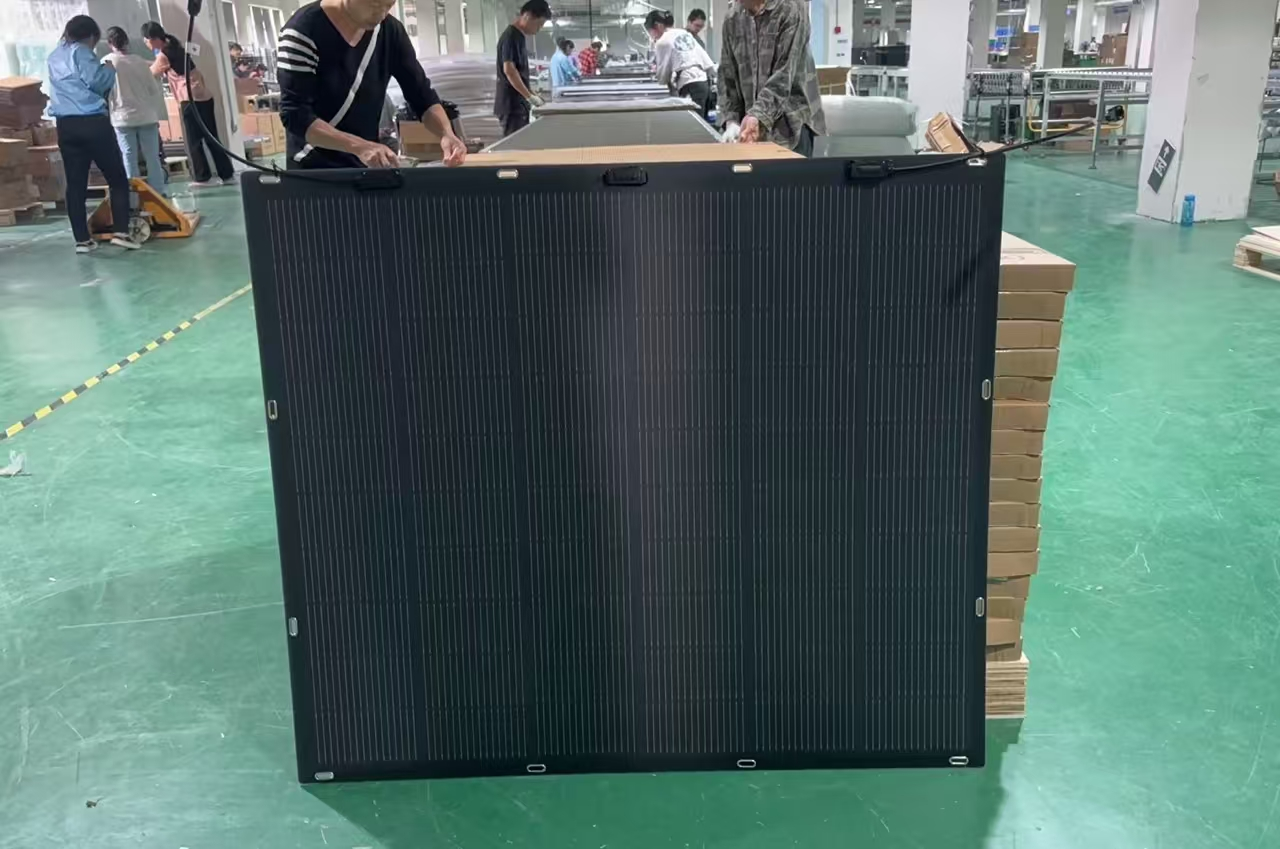
Demax Balcony Solar Power System: Key Features and Results
Modules Designed for Large-Scale Integration and Customization
Demax has designed solar power modules for urban balcony installations. Panels are modular and can be assembled and disassembled easily using standard connectors. Heavy-duty lightweight frames supporting panels (each under 20 kg) can be installed on mounts securely without the need for structural changes. This design of panels eliminates the need for complex and messy wiring installations: panels can be plugged into a socket of a household circuit. In 2024, SolarPower Europe registered over 435,000 installations of balcony solar systems in Germany, demonstrating the market demand for temporary solar power balcony systems.
Seamless and Automatic Synchronization with the Grid.
Demax has designed microinverters for balcony solar modules that convert direct current (DC) into alternating current (AC) grid. Unlike other inverters, microinverters automatically synchronize utility frequency when backfeeding with the grid and export surplus energy. An integrated energy gateway computes and adjusts the phase alignment of electricity generated onto the grid in less than 0.02 seconds, ensuring the self-consumption of energy. These features are excellent for complex urban multifamily systems, where the need for self-usage of generated modules energy is critical.

Perfect Balance for Urban Demand.
Solar energy systems on urban balconies help to adjust the solar energy output to the everyday energy needs of the household modules.
Typical EU Small-Household Consumption (1–2 Persons): 2.1–3.4 kWh/Day
The average small European household (one or two residents) consumes 2.1–3.4 kWh per day with household/office electrical appliance use, especially with lighting, refrigeration, and electronics. The usage pattern is reflective of a lifestyle with a higher emphasis on energy efficiency, which is characteristic of urban compact households, especially where household/office electric loads such as heaters and dryers are uncommon.
Field Performance: 600 Wp Demax System Delivers 68% Self-Consumption in Berlin Apartment
In Berlin, a 600 Wp Demax balcony system provides 68% of a balcony residential apartment’s energy needs. The system output matches average household energy needs for morning and evening use. The system provides predictable and repeatable generation, matched to demand, for self-supporting consumption and minimizes reliance on the electric utility company’s grid. Compact systems can serve small household consumption and self-supply energy.
Regulatory Simplicity and Installation Advantages for Residential Users
No Building Permit Required in Germany and Netherlands for ≤600 Wp Balcony Solar Power Systems
In Germany and in the Netherlands, balcony solar systems with output of up to 600 Wp are building permit exempt. The regulatory exemption accelerates system usage as the need for permits and the approval process are removed. The system can be installed on a weekend. The solar panel is modular and can be attached to the balcony railing or wall of the household, then plugged and played to the household’s existing electrical system with all the connections being safe. The streamlined process eliminates around 15% of the need for permits and paperwork, and provides a standard interface to the grid. It complies with the safety standards of the grid connectors. The standards for Germany and for the Netherlands are VDE-AR-N 4105 and NEN 1010, respectively.
Economic and Practical Considerations for Renters and Homeowners
Balcony solar allows for quick and easy system deployment at every user type. Renters install solar panels without structural adjustments and usually without landlord consent. Portable systems can be taken when renter moves. Homeowners see a return on investment from direct bill savings with a payback period of 3–5 years. In many European countries, solar panels under 600 Wp do not require building permits. The modular panel design allows for incremental expansion.

This model addresses major backers of solar use in urban areas, including renters, which have limited or no access to building roofs, and low initial costs. This allows the user to see immediate savings on their utility cost. The solar systems are compliant with regulations and on average users see 68% of their solar produced energy consumed. The systems also provide utility savings which are contracts.
Common Questions
Will I need professional assistance with the Demax solar system?
The system was designed to be modular and easy. You can use a solar system without professional assistance.
Will I need to get permits to use a Demax solar system?
In Germany and the Netherlands, If you have solar systems under 600 Wp, you do not need building permits.
Will the Demax solar systems work at rental properties?
Because the Demax system is lightweight and easy to install, you'll be able to use it without structural modifications.
What is the payback period for the Demax solar system for balconies?
It is commonly between 3 to 5 years based on local utility rates and usage.
What is the Demax system's energy output?
A 600 Wp system can cover 68% of the daily energy consumption of a small home around 2.1 - 3.4 kWh/day.