
 EN



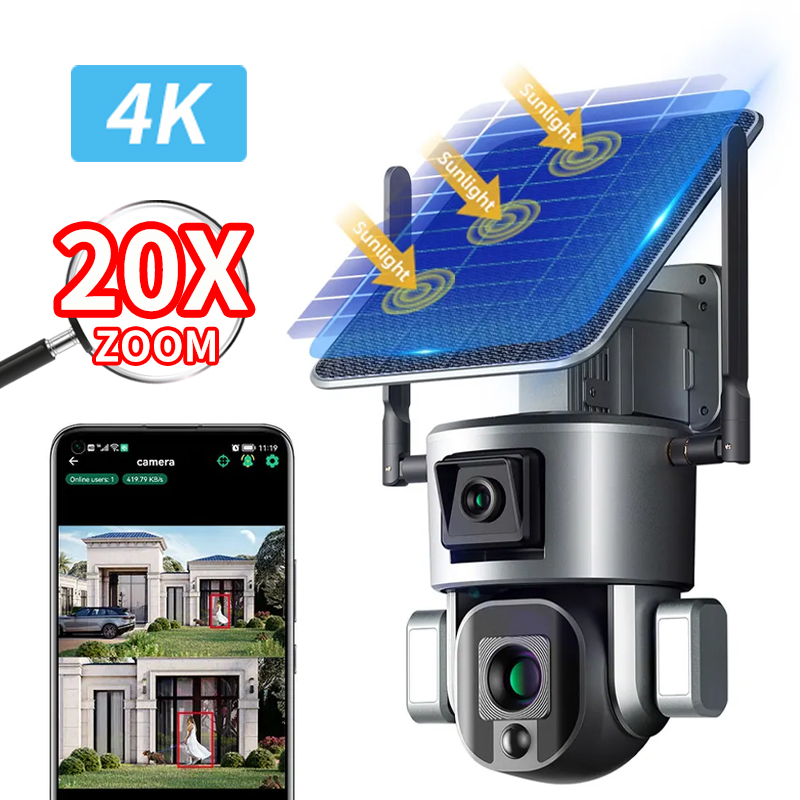
4G/LTE Cellular Connectivity for Off-Grid Solar Camera Operation
Solar cameras become fully independent from grid power and internet through the use of 4G Long Term Evolution (LTE) technology. Solar cameras can take advantage of other mobile broadband networks, and in many cases, especially in the case of construction, agricultural, or wilderness sites, where Wi-Fi or satellite internet is not practical. Construction, agricultural, or wilderness sites can use them easily.
Fully independent PowerGrid Local and Fixed-Line internet are no longer necessary because all data is passed through a local phone tower.
Solar cameras paired with PV (photovoltaic) . Additionally, solar cameras are paired with . Solar cameras paired with PV (photovoltaic). Solar cameras paired with and PV (photovoltaic). paired with
Intelligent Power Management (IPM) means a camera will take the most intelligent action based on available power, which results in much longer internval between maintenance. Real time alerts as well as high-definition (HD) video are always available.
SIM Card Flexibility and Carrier Support: Compatibility with AT&T, T-Mobile, and Verizon
All major U.S. carriers including AT&T, T-Mobile, and Verizon support the modern 4G LTE solar camera designs. All models support a standard nano-SIM and an eSIM. With the possibility to use a different carrier in each region, there have been significant benefits to deploying this design.
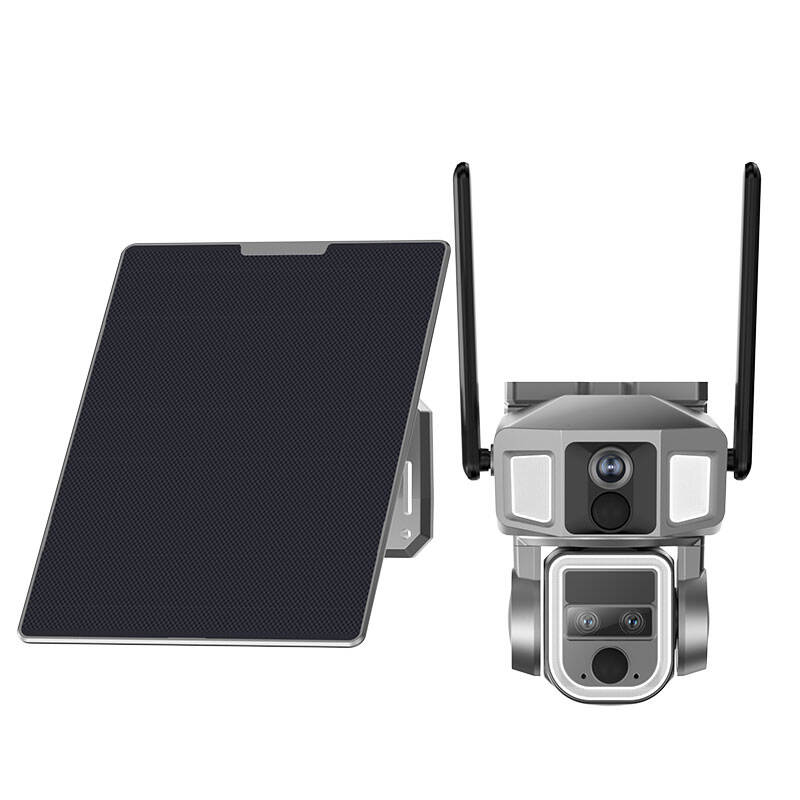
With this design you have the ability to:
- Match your device with the best carrier plan to confidently deploy in rural or low signal areas.
- Choose between multiple options for your data plan and base it on your usage. Examples including, but not limited to, data plan choices with uploads that are either continuous or motion triggered.
- Use any carrier plan or swap to a different plan with no device changes.
- Some models can support switching to a different carrier when congestion or an outage occurs.
For solar camera deployment in diverse deployments, covering different machine designs will help achieve credibility in the EEAT.
Wi-Fi vs. Cell: The Essential Trade-Offs to Be Aware of for the Solar Camera's Deployment
The Importance of Cellular in Off-Grid Solar Deployments
Wi-Fi creates the most limit for a deployment. The Wi-Fi signal outdoors is rarely more than 150-300 feet, and is especially bad with anything blocking the line of sight. Wi-Fi also needs a powered router, a broadband ISP and a whole bunch of other stuff that can’t be counted on in the wilderness. The cellular connection needs no line of sight, no ISP contracts, and no router extensions. The deployment is independent during power outages, and agile. Cellular is not just better, it is needed.
Zero Infrastructure Wireless Architecture: No Router, No Hub, No Mains Power
Self-contained solar cameras are designed with zero-infrastructure architecture: solar panel + battery + 4G LTE modem + onboard processing. This system is free from routers, hubs, Ethernet cables, and AC adapters. This system is reliant only on sunlight and cellular coverage. Because of this architecture, the installation costs are significantly less, by nearly 62% on average, when compared to the majority of wired alternatives according to the latest, 2023, Field Report from the Solar Energy Industries Association (SEIA). Building managers deploy them at construction perimeter, agricultural border, and conservation easement sites without the need to schedule engineers or get approvals to dig trenches. The self-contained cameras have an IP66 rating for the enclosures. These enclosures have the ability to adapt to the changing daylight seasonally. Interestingly, by taking away the mains power, two failure vectors are also eliminated: the inability of the grid to stay stable and the tampering of the cables connected. With no mains power and no ISP fees, this architecture improves security in off-grid areas.
Remote Access and Data Management Over Cellular Networks
Get Real-Time Streaming, Motion Alerts, and Dual-Storage (both Cloud and MicroSD) Through 4G.
4G LTE lets you upgrade your solar camera to a completely autonomous solar surveillance camera. It allows you to have true real-time HD streaming (the fastest streaming that actually exists), encrypted motion alerts with no local network reliance, and dual storage redundancy. When activity triggers you, the camera sensor snaps a picture and sends you a compressed picture instantly, while simultaneously starts the cloud recording and saves the full resolution version to your onboard microSD. The manufacturer apps give you live streaming, timeline playback, and event viewing, all designed to run on low-bandwidth cell networks. We use cell networks to help save battery between solar charges. It can be used for anything that is a temporary site that needs surveillance ranging from remote job sites to observing animals. It allows you to have a completely self sufficient site that can be used for anything.
FAQ Section
What is 4g LTE?
4G LTE is a technology system used by cellular networks to allow devices to send and receive data over the air (via radio waves) at greater speeds due to the use of broadband compared to its predecessors.
How do solar cameras operate without grid power?
Solar cameras use solar panels to generate power to run the camera, which is also provided by a rechargeable battery. The 4G LTE network is used to transmit data.
Do all 4G LTE solar cameras accept all carriers?
Yes. Most solar cameras that can accept a nano SIM and eSIM, which are some of the newer camera models, work with all the major carriers in the U.S. including AT&T, T-Mobile, and Verizon.
What advantages does cellular have over Wi-Fi for remote installations?
Cellular networks can cross distances, do not need a router, and are not subject to broadband ISP contracts, allowing robust remote functionality and useful coverage.
What is dual-storage in solar cameras?
Footage is saved to the cloud and a microSD card, providing safe storage redundancy against theft and data interruptions.