
 EN



Performance Reliability Against the Variability of the Solar Dependent System
For solar water pump solutions, varying solar irradiance, and extreme seasonal temperatures create operational difficulties in remote areas where grid supply power is not feasible. Constant water access needs consistent performance sustainability and assures parameters within varying limits.
Enhanced Yield Through Technology Innovation
Maximum power point tracking (MPPT) technology extends the operational limits of performance sustainability through its intelligent technology. It continuously self-optimizes the electromechanical circuit operating points to obtain the best possible match, thereby reducing loss of operational limits. It's particularly important to offset the effects of solar panel output drop due to increased temperature (0.3% to 0.5% drop per one degree Celsius over the standard test conditions). Additionally, high MPPT is useful for offsetting the effects of shorter circuit durations. Tested results have shown that MPPT controllers increase energy capture by 30% over standard PWM systems, thereby impacting the consistency of water delivery.
12 Month Live Data on the Demax SP-3000 Showing 92% Uptime the Harsh Climate of The Rajasthan’s Thar Desert
A 12-month live demonstration in the Rajasthan Thar desert (Table 1) where temperatures range over 48 degree Celsius and dust storms are a frequent daily occurrence, demonstrated the system’s fortitude. The monitored Demax SP-3000 units stood from the extreme environment with 92% operational uptime, and within ±5% of its target levels of in the solar irradiance shifting environment. The reliability of the system can be attributed to the dust proof and thermal derating technology incorporated to the system.

Autonomous, Battery Free, and Real Off-Grid Operation
For soft and unstable weather patterns, battery less and intelligent complete automation extended the extension of solar water pumps.
Comparing Direct-Coupled and Battery-Buffered Designs for Monsoon and Cloudy Regions
In direct-coupled systems (solar panels → pump), systems are less complex but risks are higher for shutdowns due to extensive cloud-cover in monsoon regions. Battery-buffered designs are more resilient and store energy, but increase both maintenance needs and costs—adding 40% to the total—from direct-coupled systems (Off-Grid Power Systems Review 2023). Additional differences include:
Design Type Uptime in Less Light Required Maintenance Cost of System Install
Direct-Coupled Moderate (70–85%) None $1,200–$2,500
Battery-Buffered High (90–95%) Quarterly $3,800–$5,600
For rainfall that occurs in seasons, having hybrid designs is appropriate as they do not over-engineer the pump, but provide appropriate value and balance.
Situationally Aware Through Smart Autonomy: The Ability to Diagnose IoT and 'Smart' System
Integrating IoT effectively in designing the systems allows us to get up to 75% of remote system visits to stop. Pump activity, solar energy input, and water levels are all systematically monitored, and vested interests are alerted about the build-up of sediment and drop in voltage. The designed system for Cloudy and Dynamic situation of counter-the-counter balance Cloud control and keeping the pump system active and keeping water without the need of the system crashing the Cloud functionality.
Installation of Solar Water Pumps in Poorly Served Locations.
Dramatically Reduced Initial Deployment Time due to Socket-Wrenchable Framework and R.T.G. Pre-Configured Control Module.
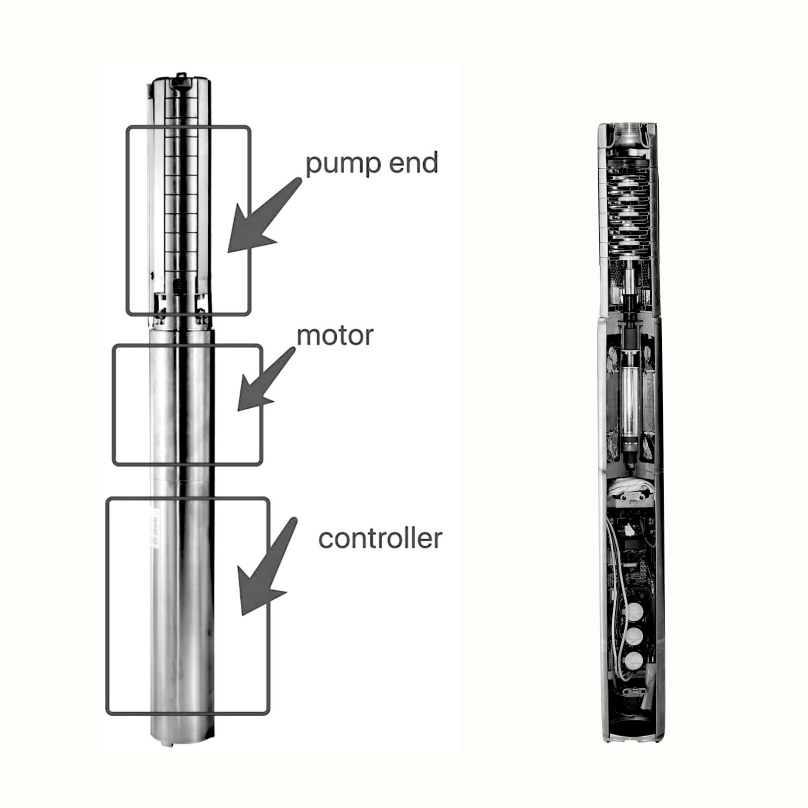
It usually takes a lot of time (days to months) and a lot of effort (expensive work) to install a water access system in a remote location. When there is no electricity in the area, the requirements become more severe (i.e. more tools and complicated work). Modern water pumps using solar technology (shown) solve the problems by using a modular design, where the two main features are lightweight construction (for easy transport) and snap-fit components (for no trenching). The pre-configuration to the control systems is performed in advance, so they are ready to use (plug and play) to simplify the technical work. Compared to conventional water pumps, the time to deploy systems is reduced by 85%. The control system works on a simple relaxed technical (plug and play) basis. Tests have shown that the pump system is fully functional within 4 hours, and the time to train the operators is minimal. The simplified process is especially necessary in mountainous and desert regions (arid regions) where transporting the needed equipment to the work site presents challenges. The implementation time is reduced because there is no need to install complex control circuitry and resources to provide auxiliary fuel (i.e. the system is fully solar driven). The quick implementation of the control solar resources allows a 40% reduction in the time and cost to provide the pumps, thereby solving the problem of sustainable access to water.

Total Cost of Ownership and Long-Term Viability for Remote Communities
For remote communities without access to the grid, solar water pumps constitute an energy solution and a decades-long investment. Diesel alternatives are less expensive initially, but their total cost of ownership (TCO) becomes 40–60% more significant over a decade due to the high volatility in the fuel market and constant maintenance (ReliabilityX). Solar systems incur no future fuel costs and require fewer moving parts, resulting in an operational cost reduction of 90% after the system settles. Other important factors include:
Ability to withstand unforgiving conditions: For environments with high salinity or deserts, systems made with corrosion-resistant materials do not experience significant performance degradation.
Sustained energy cost savings: The sun is free and has no transportation or storage costs, unlike diesel.
Low maintenance requirements: fewer moving parts leads to longer maintenance intervals.
Long-term costs are further improved with no connection fee to the grid. Provided with a 20-year footprint, solar water pumps with a low maintenance requirement allow communities to save funds to invest in education or build other infrastructure to achieve economically viable growth.
FAQs
How can solar water pumps be more efficient with the use of MPPT technology?
MPPT (Maximum Power Point This technology allows continuous adjustment of a system and maximizes the solar panels energy harvest. MPPT technology allows the system power to be optimally operational, enabling the system to better capture energy in low light situations and temperature-related losses.
What is direct coupling and how is it different from a battery-buffered solar water pump?
Battery-buffered designed systems offer more uptime and adaptability with a maintenance cost in the 90% range than direct coupling, without the adaptability.
What are the benefits of modular designs for remote locations?
Modular designs cut down on the time and resources for remote designs, deploying them in less than four hours. The modular designs use snap-fit connectors and premade, pre-commissioned controllers. These designs no longer need massive constructions, cranes, and extra gears.
What are some of the improvements brought to solar pumps by the Internet of Things?
IoT sensors break through the limitations of remote solar pumps by giving them real-time reasons for failures. They also provide predictive analysis of the weather to let the pumps know when the water is and is not likely to be free, creating more efficient pumps. This also reduces the maintenance needed by allowing for less manual checks.
What are the maintenance costs of diesel systems compared to solar pumps?
While diesel systems have initial costs, they are far more expensive to maintain in the long run. They need consistent add-ons of fuel, and the systems need maintenance breaks. The maintenance breaks of solar pumps are much more predictable, and there are no fuel costs.