
 EN



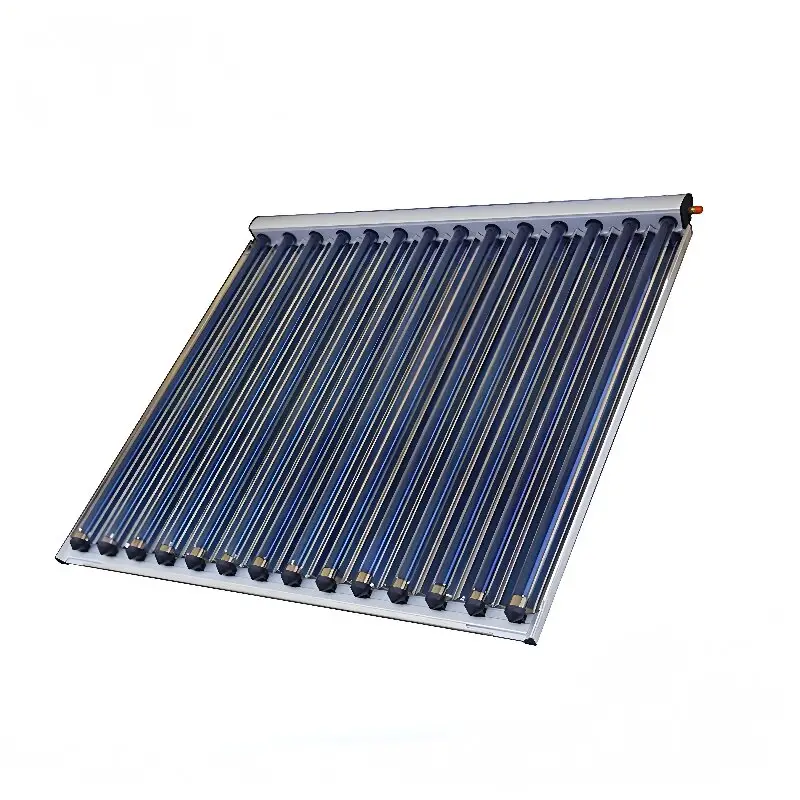
Thermal Efficiency of Demax Vacuum Tube Heat Pipe Collectors Below 5°C
Field Performance Data from Nordic and Alpine Installations
Below 5°C, vacuum tube heat pipe collectors retain a significantly larger share of rated efficiency than flat plate collectors. In Stockholm, a four-unit string of evacuated tube collectors increased water outlet temperature by 15.6% maximum and 13.1% average compared with an equivalent flat plate array—the gap widening markedly in cold seasons (Climate 2020). This performance advantage stems primarily from vacuum insulation: with near-zero conductive and convective heat loss from the absorber to ambient air, useful output remains stable even as temperatures plummet.
Nordic monitoring confirms collector efficiency is not static but a dynamic function of ambient temperature, operating fluid temperature, and solar irradiance. Alpine studies near Davos further show that flat plates deliver high annual yield only when mean fluid temperature stays around 25°C—whereas evacuated tube designs excel at higher operating temperatures and under freezing ambient conditions. Demax vacuum tube heat pipe collectors leverage this principle through sealed copper heat pipes housed in vacuum tubes, minimizing thermal losses while enabling reliable morning start-up below 5°C. Importantly, hot water delivery still depends on solar availability—not ambient temperature alone—so gains translate directly into reduced backup heating demand during winter.
Efficiency Comparison with Flat Plate Solar Collector Under Freezing Conditions
At 0°C ambient, flat plate collectors suffer increasing convection and conduction losses as the absorber-to-air temperature differential grows, causing efficiency to drop sharply. In contrast, evacuated heat pipe collectors maintain high efficiency because vacuum insulation decouples outer glass temperature from internal fluid temperature—keeping the tube surface near ambient even when internal fluid reaches 60–80°C. SRCC OG-100 certification data and field tests confirm this divergence intensifies below 5°C. Romanian monitoring found heat pipe evacuated tubes delivered ~9% more annual energy than flat plates, with the gap expanding during colder months. Crucially, cold-season heat dispersion in evacuated tubes falls nearly to zero, while flat plate output drops enough to discourage use in harsh climates. For Demax systems, this translates to a favorable shift in the operating curve when high-temperature output or resilience to freezing conditions is required. That said, flat plates remain competitive in mild spring or fall conditions—where both technologies perform similarly per unit of absorber area. Below freezing, however, vacuum tube heat pipe collectors offer superior stability.
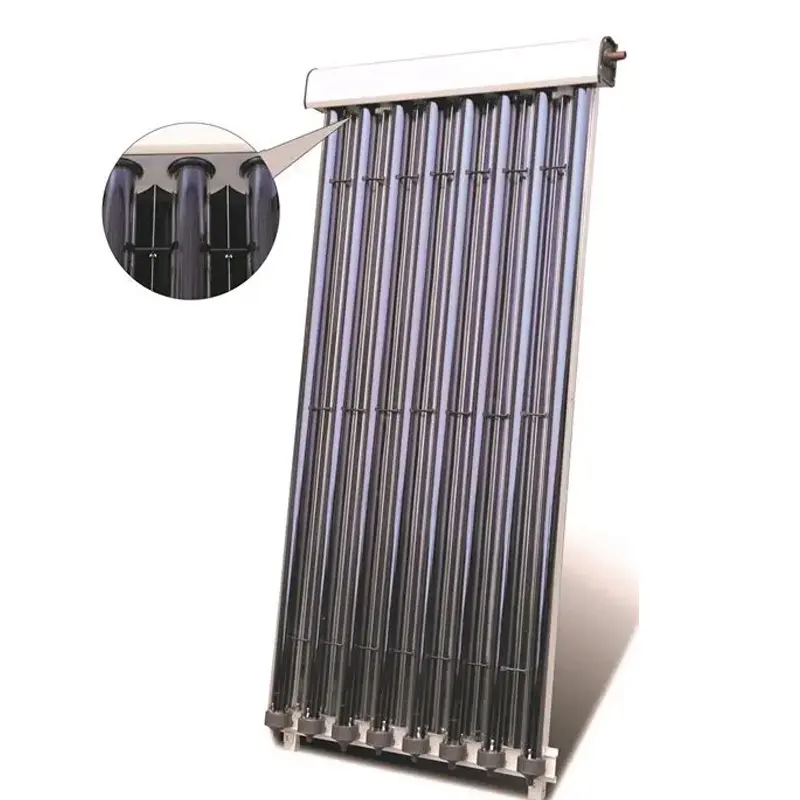
Heat Pipe Reliability and Operational Limits in Sub-Zero Climates
Copper Heat Pipe Design and Low-Pressure Fluid Behavior at Freezing Thresholds
Demax vacuum tube heat pipe collectors use sealed, evacuated copper heat pipes charged with a small volume of water—typically about 1 cc in a 6 mm × 150 mm sintered-wick design. The low internal pressure lowers the water’s boiling point, enabling vaporization at moderate absorber temperatures and efficient upward heat transfer. Unlike flat plate collectors, there are no large liquid channels or exposed water passages. When ambient temperatures fall below 0°C, the working fluid freezes within the sintered wick—but its minimal mass expands without stressing the copper envelope. No mechanical damage occurs, and capillary action resumes once thawing begins. Practical heat transfer initiates around 20°C and extends reliably up to ~250°C. Industry reliability data indicate a service life exceeding 20 years, with proven tolerance for thousands of freeze-thaw cycles (2023 Heat Pipe Design Review).
Freezing Recovery Dynamics, Thermal Lag, and System Resilience
Frozen heat pipes introduce only minor thermal lag at startup. Because the working fluid volume is under 1 cc, the absorber needs only slight warming above 0°C to melt the ice. Rapid heat conduction through the copper envelope and sintered wick ensures phase-change recovery occurs within minutes after the absorber reaches thaw temperature. Accelerated testing documented 1,600 freeze-thaw cycles between −40°C and +90°C with no measurable performance degradation. The absence of large water channels, manifold stagnation points, or moving parts further enhances system resilience—supporting consistent operation after cold nights and rapid frost recovery.
Balancing Seasonal Output: Preventing Winter Underperformance Without Summer Overheating
Frost-Protected Operation Strategies in Vacuum Tube Heat Pipe Systems
Frost protection in vacuum tube heat pipe systems relies on inherent low-pressure fluid behavior and intelligent flow control—not glycol-based antifreeze like flat plate systems. Since the heat pipe condenser is thermally isolated from the circulating loop, a small drain-back volume may freeze harmlessly without risking manifold or piping damage. Controllers activate the circulation pump only when the header sensor exceeds 25–30°C, avoiding cold-start thermal shock and unnecessary heat loss. During shoulder seasons, variable-speed pumps and stagnation-limiting valves manage excess summer heat by slowing flow or diverting energy when storage approaches 95°C. Field validation shows these strategies reduce winter parasitic losses by 15–20% and hold summer stagnation temperatures below 120°C (Solar Keymark 2023).
Real-World Validation: Northern Sweden Case Study at −32°C
In a 2023 monitoring campaign in northern Sweden, a rooftop array of Demax vacuum tube heat pipe collectors operated continuously for 14 days with ambient temperatures reaching −32°C. Despite extreme cold, the system delivered a daily average of 1.9 kWh/m² of aperture area, with midday manifold outlet temperatures peaking at 53°C under clear skies. The low thermal mass of the heat pipe condenser enabled start-up within 18 minutes of sunrise, while vacuum insulation retained residual heat for several hours after sunset. A side-by-side flat plate collector in the same test produced 31% less cumulative energy over the period and required electric trace heating to prevent ice blockage. The evacuated tube system consistently supplied preheated water at 38–41°C to the storage tank—reducing backup energy demand by an estimated 46% during the cold spell. No frozen heat pipes or glass tube failures were observed. These results demonstrate that properly installed Demax vacuum tube heat pipe collectors remain productive and durable in severe sub-zero environments—outperforming conventional flat plate solar collector designs where winter reliability matters most.
Frequently Asked Questions
Do vacuum tube heat pipe collectors perform better in cold weather compared to flat plate collectors?
Yes, vacuum tube heat pipe collectors retain higher efficiency in freezing conditions due to their vacuum insulation, which minimizes heat loss caused by convection or conduction.
Are freezing temperatures harmful to the heat pipes?
No, the minimal mass of working fluid in heat pipes freezes harmlessly without damaging the copper envelope. Recovery occurs quickly once thawing begins.
How do vacuum tube systems prevent frost-related damage?
Vacuum tube systems utilize low-pressure fluid behavior and intelligent flow control strategies that avoid the need for glycol-based antifreeze while managing frost recovery effectively.
Are vacuum tube heat pipe collectors reliable in extreme sub-zero environments?
Yes, field studies demonstrate their durability and consistent performance in temperatures as low as −32°C, outperforming flat plate systems in such conditions.
How long does it take for a frozen heat pipe to recover and produce heat?
Frozen heat pipes recover after slight warming above 0°C, typically within minutes due to efficient heat conduction through their copper design.
Table of Contents
- Thermal Efficiency of Demax Vacuum Tube Heat Pipe Collectors Below 5°C
- Heat Pipe Reliability and Operational Limits in Sub-Zero Climates
- Balancing Seasonal Output: Preventing Winter Underperformance Without Summer Overheating
- Real-World Validation: Northern Sweden Case Study at −32°C
-
Frequently Asked Questions
- Do vacuum tube heat pipe collectors perform better in cold weather compared to flat plate collectors?
- Are freezing temperatures harmful to the heat pipes?
- How do vacuum tube systems prevent frost-related damage?
- Are vacuum tube heat pipe collectors reliable in extreme sub-zero environments?
- How long does it take for a frozen heat pipe to recover and produce heat?