
 EN



Challenging the Myth of Solar Efficiency in Cold Climates
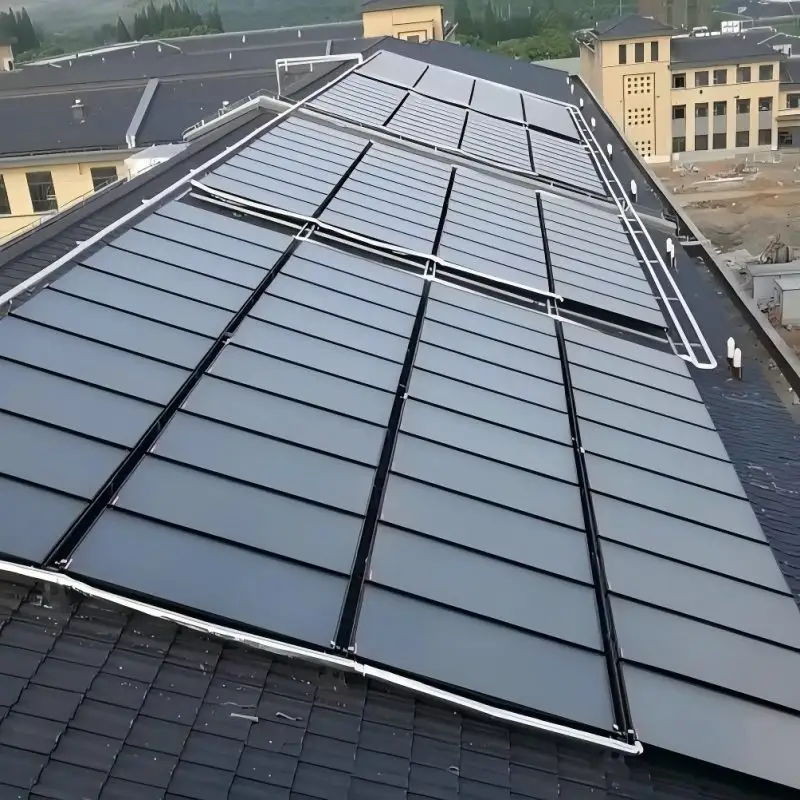
Many assume that solar thermal technology is restricted to tropical or temperate climates. However, engineering advancements have fundamentally changed this dynamic. A high-quality flat plate solar collector is designed to thrive even when ambient temperatures plummet. The key lies not just in capturing solar radiation, but in the sophisticated management of thermal energy. For homeowners and commercial facility managers in cooler regions, the ability to harvest solar power during winter months is no longer a luxury but a viable, high-performing reality.
The Engineering Behind Thermal Retention
What allows a collector to function effectively when it is freezing outside? It starts with the selective absorber coating. These advanced materials are engineered to maximize short-wave solar absorption while drastically reducing long-wave re-radiation—effectively trapping the heat once it enters the collector. Combined with high-density, closed-cell insulation and low-iron tempered glass, the system creates a mini-greenhouse effect. This robust thermal barrier prevents heat loss, ensuring that even under grey, frigid skies, the fluid within the circuit gains enough energy to be useful for space heating or domestic hot water.
|
Performance Component |
Function in Cold Weather |
|
Selective Absorber Coating |
Captures solar radiation efficiently while minimizing heat loss |
|
Low-Iron Tempered Glass |
Maximizes light transmission while maintaining structural integrity |
|
High-Density Insulation |
Prevents thermal leakage to the external environment |
Comparative Performance in Extreme Temperatures
Efficiency in cold weather is measured by the collector's ability to minimize heat loss (U-value). Advanced designs show a significant reduction in heat dissipation compared to traditional models. Below is a snapshot of how high-performance collectors maintain their edge during winter transitions.
|
Metric |
Standard Flat Plate |
High-Performance Collector |
|
Heat Loss Coefficient |
Moderate |
Ultra-Low |
|
Winter Energy Yield |
Baseline |
25-30% Higher |
|
Thermal Stability |
Susceptible to fluctuations |
Stable under low solar irradiance |
Optimizing Systems for Year-Round Reliability
Operating a solar thermal system in low-temperature regions requires a holistic approach to system design. The use of specialized heat transfer fluids—typically a propylene glycol-water mixture—is standard practice to prevent freezing. When paired with a well-configured controller, the system ensures that pumps only operate when the collector is warmer than the storage tank, protecting the components from thermal stress. Such design precision ensures that the collector remains a reliable source of energy regardless of the season.
Economic Viability and Long-Term Value
Investing in solar thermal energy provides a clear financial roadmap. By offsetting the heavy load of winter heating requirements, property owners can see immediate reductions in monthly energy bills. Furthermore, because these collectors are built to withstand harsh weather conditions, maintenance requirements are exceptionally low. The transition from expensive, fossil-fuel-dependent heating to a renewable, solar-based approach pays for itself over time, proving that these systems are as economically intelligent as they are environmentally responsible.
Advanced Manufacturing and Quality Assurance
True performance begins at the factory level. Demax leverages state-of-the-art production lines and stringent quality control protocols to ensure that every unit meets international certification standards. By prioritizing the durability of materials and the precision of the assembly process, Demax guarantees that its solutions remain consistent under extreme environmental pressure. Whether for residential retrofits or large-scale commercial integration, Demax provides the manufacturing excellence and engineering support required to deliver dependable solar thermal performance all year round.