
 EN



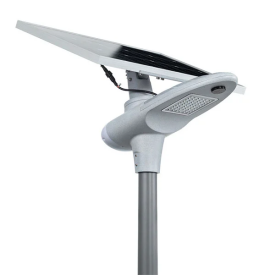
A poorly sited solar light wastes most of the free energy it was built to collect. Installation quality decides whether a unit runs all night or goes dark before midnight. This guide walks installers and procurement teams through the steps that turn a boxed luminaire into a dependable source of night-time light.
Plan the Site for Full Sun Exposure
Set Orientation and Tilt Angle for the Photovoltaic Panel
The photovoltaic panel is the only income source for an off-grid luminaire, so placement sets the ceiling on daily energy capture. A solar light reaches peak output when the panel faces the equator — true south in the northern hemisphere, true north below it. The tilt angle should track local latitude; a shallow tilt suits low latitudes, while 40 degrees needs roughly 40 to catch low winter rays. A sun-path check in the worst month prevents optimizing for a single summer afternoon.
Eliminate Shading from Nearby Obstacles
Shading hurts a photovoltaic panel more than intuition suggests, because series-connected cells share one current path; one shadowed strip drags the whole string down. Walk the line at 9 a.m., noon and 3 p.m. to map shadows from walls, branches and stored equipment. Even brief shading in the charge window reduces the amp-hours stored in the LiFePO4 battery and shortens the night. Keep a clearance radius of at least three times the obstacle height. A solar light placed under a thin branch may look clear at noon yet lose two hours of charge behind morning leaf shadow. Trim or move the pole so it stays open all day.
Mount at the Right Pole Height and Secure the Fixture
Choose Pole Height for Coverage and Safety
Pole height trades coverage against glare and wind load. A low solar street light throws a small bright pool and leaves dark gaps between units; raising the mast spreads the same lumen count over a wider footprint. For a single-lane road, 5 to 6 meters is typical; open yards often use 7 to 8 meters. Taller poles also keep the lens above vehicle headlight bounce and casual tampering. A solar light mounted too low invites poor spread and easier physical damage, so height is a service-life decision.
Fix the Fixture and Photovoltaic Panel Firmly
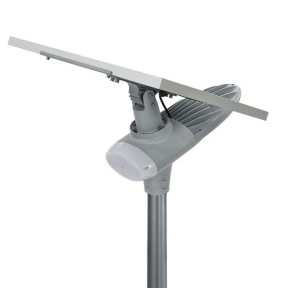
Loose hardware is the quiet killer of outdoor electronics. Vibration from wind and traffic works screws loose and misaligns the panel from its set tilt angle. Use the supplied stainless brackets, torque to specification, and confirm the photovoltaic panel cannot rotate on its yoke after locking. A sealed, IP65-rated enclosure keeps dust and rain from the driver and battery compartment, but only if the gasket seats evenly with no trapped cable. A solar light that rattles in a storm drifts off aim within weeks, eroding the capture the install was meant to maximize.
Place Sensors and Commission the System
Aim the Motion Sensor and Control the Beam Angle
A motion sensor saves energy by holding a dim baseline stepped up only when movement arrives, but it must see the approach, not the wall. Mount the detector clear of direct headlight and reflective surfaces that cause false triggers. The beam angle of the LED array should match the lit zone: a narrow beam suits a long corridor, a wide flood fits a square. Match the sensor arc to the beam so a person gets light before the dark center. A solar light with a well-aimed sensor wastes no lumen on empty hours, stretching the stored charge across the night.
Commission the Charge Controller and LiFePO4 Battery
Commissioning is where a correct install either locks in or falls apart. The charge controller manages the flow from the photovoltaic panel into the LiFePO4 battery and out to the lamp, protecting against overcharge, over-discharge and reverse current at night. Set the correct battery type and voltage, confirm the ambient light threshold that switches the lamp on at dusk, and test the time-control schedule. A LiFePO4 battery rated for deep cycles delivers its rated life only when the controller stops discharge before the floor. A unit left at factory defaults may switch off early or cook the cells in strong sun.
Procurement, Scenario and Maintenance Advice
A Real Deployment Scenario from a Logistics Park
A logistics park in a coastal region needed to light a 180-meter internal access road with no grid nearby. The first attempt used short 3-meter poles facing east, so batteries drained by 1 a.m. and the route sat dark for the early shift. The installer returned, raised the poles to 6 meters, reset the tilt angle to local latitude, oriented the photovoltaic panels true south, and repositioned each motion sensor toward the vehicle approach. After commissioning the charge controller with a correct dusk threshold, the upgraded units held full brightness all night and the batteries reached rated cycle life. The result was a continuous, safe corridor with zero energy cost.
Inspect, Use and Maintain for Long Service Life
Buy on verified certification, not headline wattage: request CE and RoHS papers, confirm the monocrystalline rating, and check the LiFePO4 cycle count. On delivery, inspect the anodized housing and verify the IP65 seal before the first rain. In use, let the charge controller manage the full cycle and avoid manual overrides that flatten the cells. Maintain on a simple cadence: quarterly panel cleaning, a yearly torque check, and a scan for new shading from grown trees. Standard IEC 60598 covers luminaire safety; electrical isolation during service follows OSHA and NFPA guidance. These steps keep a solar street light producing at spec for its full design life.
Good siting, firm mounting, careful sensor aim and proper commissioning together decide how much free energy a solar light actually converts into useful night-time illumination. Procurement teams that specify certified parts and installers that follow the steps above get dependable, low-cost light year after year.
Frequently Asked Questions
Question
What tilt angle should the photovoltaic panel use?
Answer: The panel tilt should follow local latitude so the surface meets the sun's average path across the year. Low-latitude sites near 10 degrees need a shallow tilt, while locations around 40 degrees require roughly 40 degrees. Adjust a few degrees upward if winter lighting matters most. Recheck the angle after storms, because vibration can shift the yoke and reduce daily capture.
Question
Why does shading reduce output so sharply?
Answer: Photovoltaic cells in a panel are linked in series, so they share one current path. When a branch or wall shadows even part of the surface, the blocked cells act like a bottleneck and pull the whole string's output down, not just the shaded spot. Brief shading during the main charge window cuts the amp-hours stored and shortens the night. Map shadows at morning, noon and afternoon before fixing the pole.
Question
How is the charge controller commissioned on site?
Answer: Set the battery type and voltage first, then confirm the ambient light threshold that switches the lamp on at dusk and the time schedule that follows. A LiFePO4 battery reaches its rated deep-cycle life only when the controller stops discharge before the floor. Test the motion sensor arc and beam angle after wiring. A ten-minute check prevents early shutoffs and protects the cells through every season.
Question
Can these units run through a long cloudy week?
Answer: A correctly sized solar light stores enough reserve in the LiFePO4 battery to bridge several cloudy days, because the charge controller protects the cells from deep discharge. Duration depends on panel size, the local sun average and the set output mode. Dimming the baseline and relying on the motion sensor at night extends autonomy. Sizing the photovoltaic panel with margin for the worst month keeps the route lit.
Question
Where should the motion sensor be aimed?
Answer: Aim the motion sensor to cover the approach path, not the wall or a reflective surface that causes false triggers. Place it clear of vehicle headlight bounce and keep the detection arc matched to the beam angle of the lamp. A sensor that sees movement before a person reaches the dark center feels responsive and saves energy. Test the arc after dusk with a slow walk-through.