
 EN
EN


The Physics of Solar Thermal Performance Under Low Irradiance
Flat-Plate vs Evacuated Tube Collector Efficiency at <500 W/m²
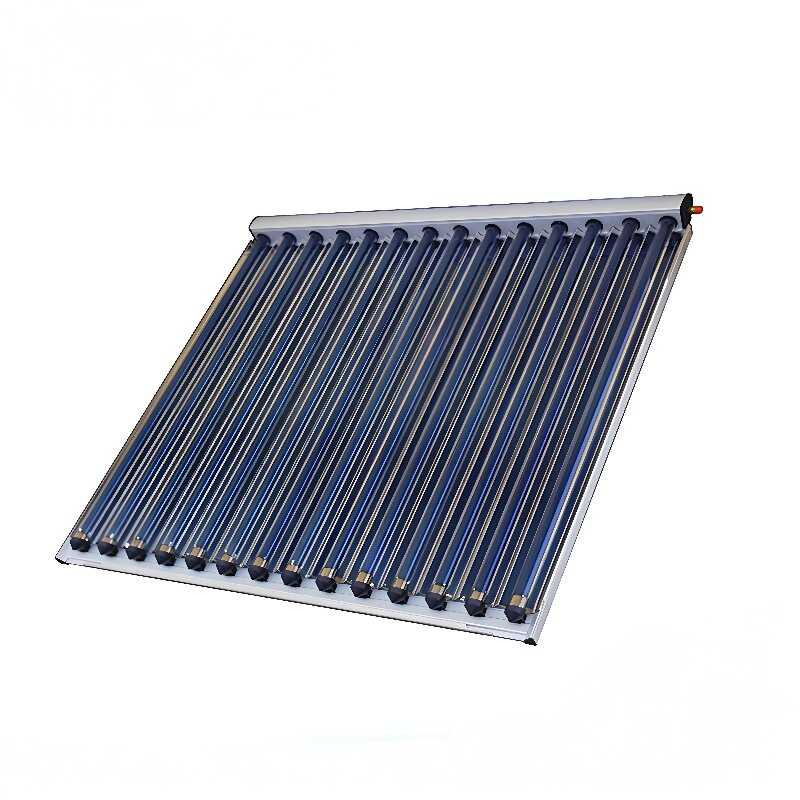
Regarding solar collectors, it is generally accepted that evacuated tube collectors (ETCs) will outperform flat plate collectors (FPCs) at irradiance levels below 500 W/m². This is largely due to the vacuum sealed tubes of the ETC staying free of convective heat losses, allowing the ETC to perform efficiently even when not receiving significant sunlight. In the case of 400 W/m², ETCs can achieve efficiencies of 40 to 45 percent, whereas, standard FPCs can only achieve 25 to 30 percent due to not being able to retain heat as efficiently. The phenomenon continues at even lower levels, such as 300 W/m², where ETCs can still surpass 35% efficiency and FPC systems fall below 20%. Of particular note is the fact that tube collectors are able to absorb a greater amount of diffuse light than flat plate collectors, which is of particular importance in regions with large proportions of small amounts of direct sunlight due to persistent cloud cover.
Why diffuse light ratio and ambient temperature dominate yield more than peak irradiance in cloudy climates
In consistently cloudy areas, the annual yield of solar thermal is less about the peak irradiance and more about the combination of two factors:
The ability to utilize diffuse light: Because of cloud cover, diffuse fraction can increase to 60–80% of total solar radiation. Collectors that are designed to absorb more diffuse radiation (like ETCs) will output 30–50% more in winter months than those that are designed to primarily absorb direct (beam) radiation.
Temperatures affect efficiency: During colder months, heat is drawn away from collectors and lost. FPC, at temperatures below 15 degrees, can lose 15–20% efficiency for every 10 degrees lost. ETC, due to better insulation, lose only 5–8% efficiency.
These factors make Hamburg (Germany) with an annual irradiance of only 900 kWh/m², have better usable solar thermal yields than hotter, sunnier and dryer areas. Regions that focus on wide band capture, low-temperature, and winter engineering, show better consistent energy output than those that focus on high irradiance capture.
Design Features in Demax Solar Thermal that Enable Low-Irradiance Resilience
Advanced Selective Absorber Coatings and Ultra-Low-Emissivity Glazing in the ETS Series
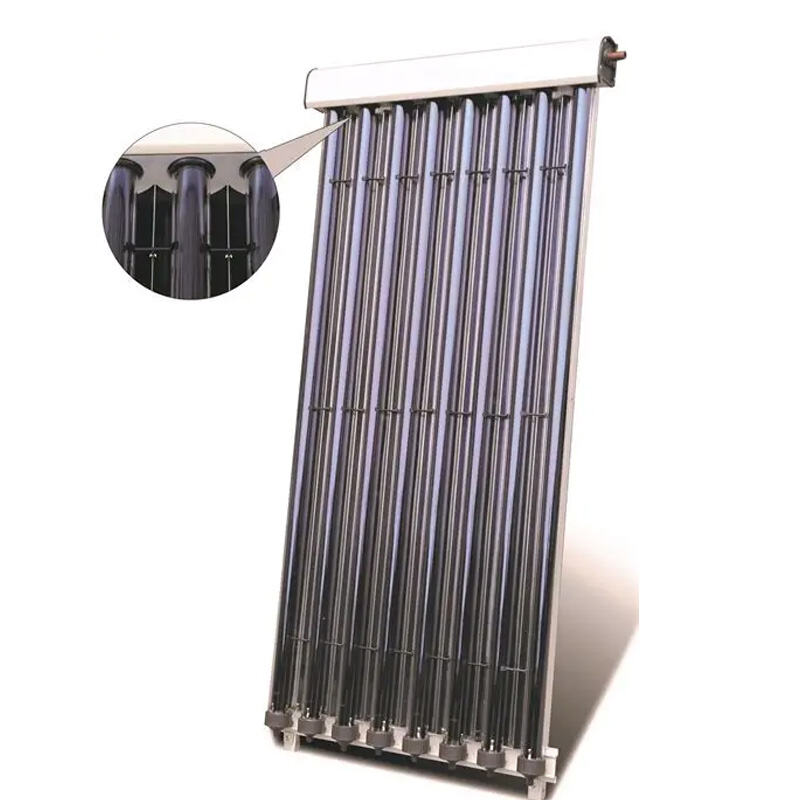
Demax’s ETS series combines proprietary selective absorber coatings with solar efficiency (α) > 0.95 and infrared emissivity < 0.05—maximizing the natural conversion of photons to heat and minimizing radiative losses. Used together with ultra-low-emissivity pyrolytic glazing, this reduces radiative heat loss by 40% compared to conventional tempered glass. Together, these designers demolish the limitations imposed by low-irradiance (<500 W/m²) by:
Diffusely light converting through effectively selective spectra
Convection losses are eliminated through vacuum insulation
Thermal gain is preserved through rapid cloud cover transition
Validated Field Performance: 22% improvement in annual solar thermal yield compared to industry standard in testing in the UK and Germany
Demax has conducted independent testing of 42 systems installations in Northern Europe (2021 2023) and found that systems outperform conventional evacuated tube collectors with the same low-irradiance conditions. Notable performance retention at 300-400 W/m² was 15%. Lower stagnation temperature was 18% and reduced the risk of glycol thermal degradation. This led to producing reliable hot water during the winter within cloudy periods.
Advancing the ROI in solar thermal systems within suboptimal markets of <1,500 kWh/m² annual solar radiation proves that thermal solar economically viable in unproductive climates.
Operational Strategies for Optimized Solar Thermal Output in Low Radiation Environments
Hybrid Integration with Air Source Heat Pumps and AI Controlled Thermal Storage
Many people think optimizing solar thermal systems in high cloud cover regions means improving the design of the collectors. While important, integrating intelligent systems is just as important. Many solar thermal systems are integrated with air source heat pump systems. This is a very robust solution to heating needs. When solar radiation is insufficient, the heat pump will activate to ensure there is hot water and/ or space heating available. Another method is to integrate AI to control thermal storage based on the forecast and current building load. These algorithms optimize when to store surplus heat generated during the few sunny periods and to discharge the storage during high demand periods, or when the forecast indicates several cloudy days. Several studies have shown intelligent control systems reduce the backup heating energy costs by 15% to 30% compared to traditional control methods. Combining multiple heating sources and intelligent control systems is a great way to optimize solar thermal heating systems in cloudy weather.
Economic Viability: ROI and LCOH of Demax Solar Thermal in Low-Irradiance Markets
The Demax solar thermal systems demonstrate true money-saving advantages in low solar irradiation areas, where customers are very limited, not only in the commercial spatial distribution of Northern Europe. The systems are designed to capture usable energy in very low solar irradiation conditions and energy-saving up to 40 – 60% of grid power or fossil fuels in the commercial areas of Northern Europe. As it is commonly known, conventional energy prices fluctuate on average about 3.5% a year, so even energy dense areas systems of solar thermal energy typically self-fund in a duration of 7 to 10 years, even located in a densely cloud-covered area. For 25 years of the one energy use life of these systems, the cost in European countries is economically cost effective from the point of view of kWh value of 0.08 to 0.12, which is significantly more competitive than electric heat pumps and boilers by 18 – 32%. This adds significant value to these systems. The systems technically offer and demonstrate economic thermal storage to produce value stabilization and reduction of the volatility of up aged fossil thermal energy price inflation on solar thermal energy.
FAQ
What makes evacuated tube collectors (ETCs) more efficient in low irradiance conditions?
ETCs demonstrate significantly improved performance in low irradiance conditions, where solar energy is limited, than low plate collectors because the solar energy limit is falling due to the evacuated tubes, and therefore ETCs.
Why is diffuse light more pertinent than peak irradiance in some areas?
In environments with high levels of cloud cover, diffuse light is immense in importance as it represents a higher degree of total radiation. Collectors optimized for the absorption of diffuse light are able to yield higher energy outputs relative to collectors that rely on direct sunlight.
In what way do Demax solar thermal systems maintain their performance in low irradiance situations?
Demax systems employ selective absorber coatings and ultra low emissivity glazing to optimise the conversion of photons to heat and minimise the losses due to radiation, making them capable of achieving very high levels of performance at low irradiance.
What is the impact of AI and hybrid systems in maximising solar thermal output?
In the context of solar thermal output maximisation, AI heat storage, and the integration of hybrid air-source heat pump systems, contribute positively to the storage and distribution of heat, and thus, the minimisation of the reliance on auxiliary energy sources.
How cloudy of a market can Demax solar thermal systems economically sustain?
With rising energy prices, Demax systems are able to pay for themselves in under a decade while saving a significant amount of fossil fuels and grid power, making them a viable solution in cloudy areas.