EN
EN




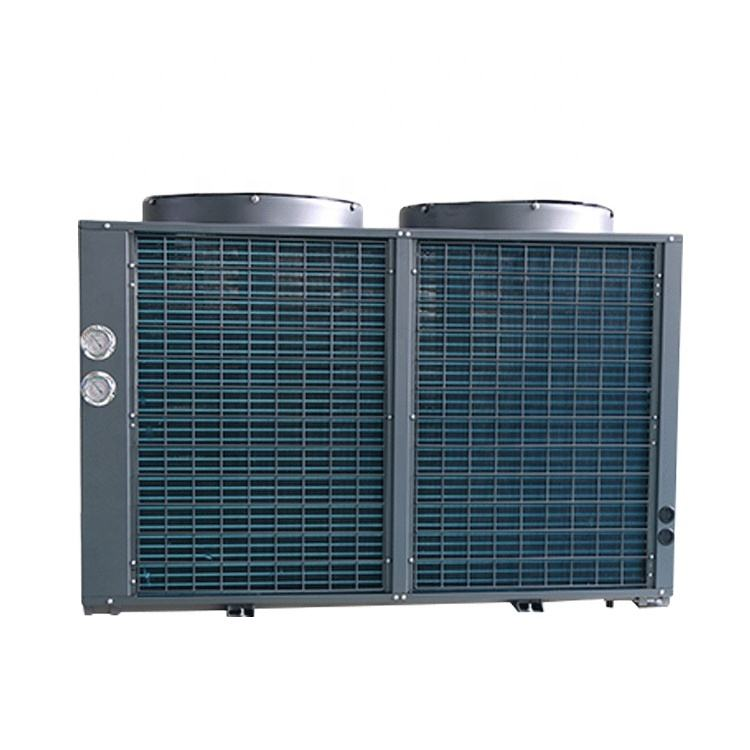
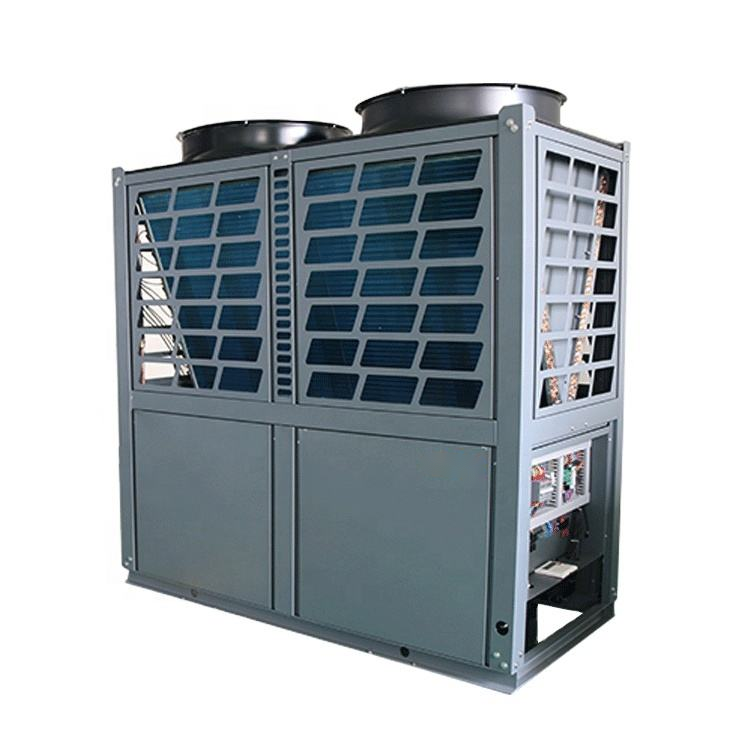
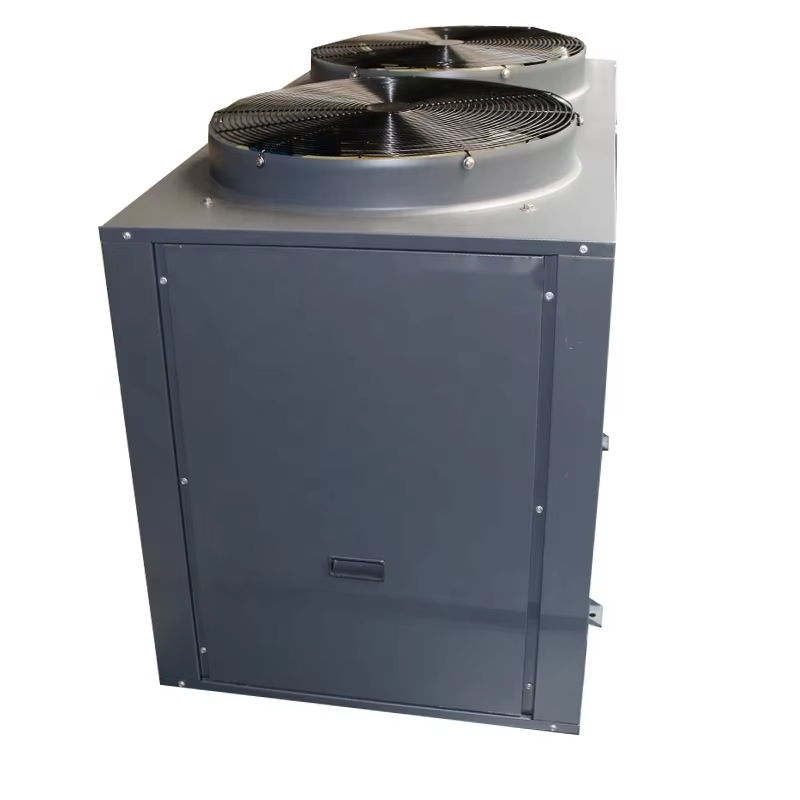
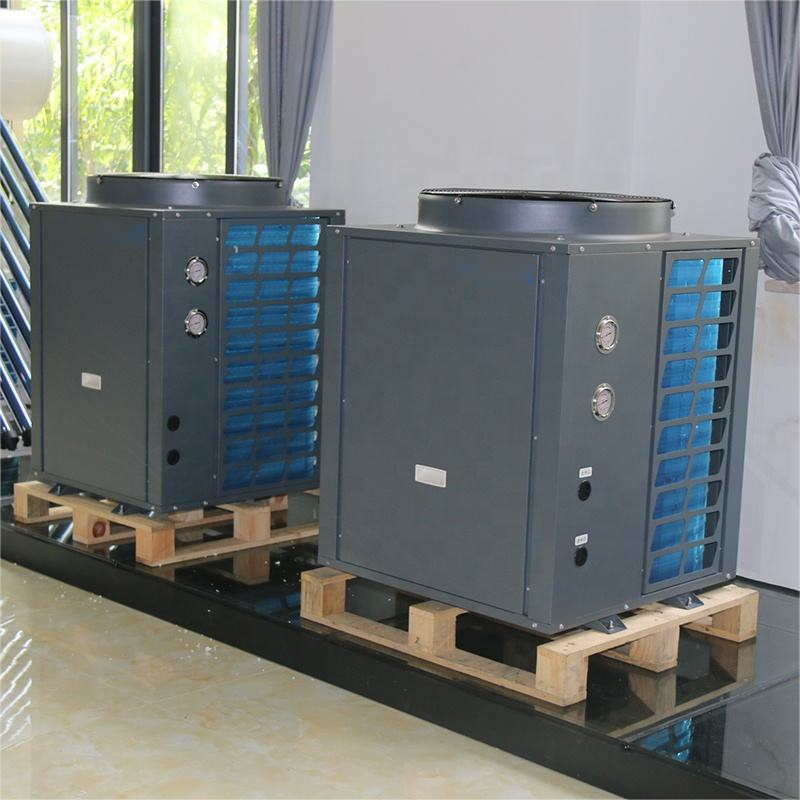
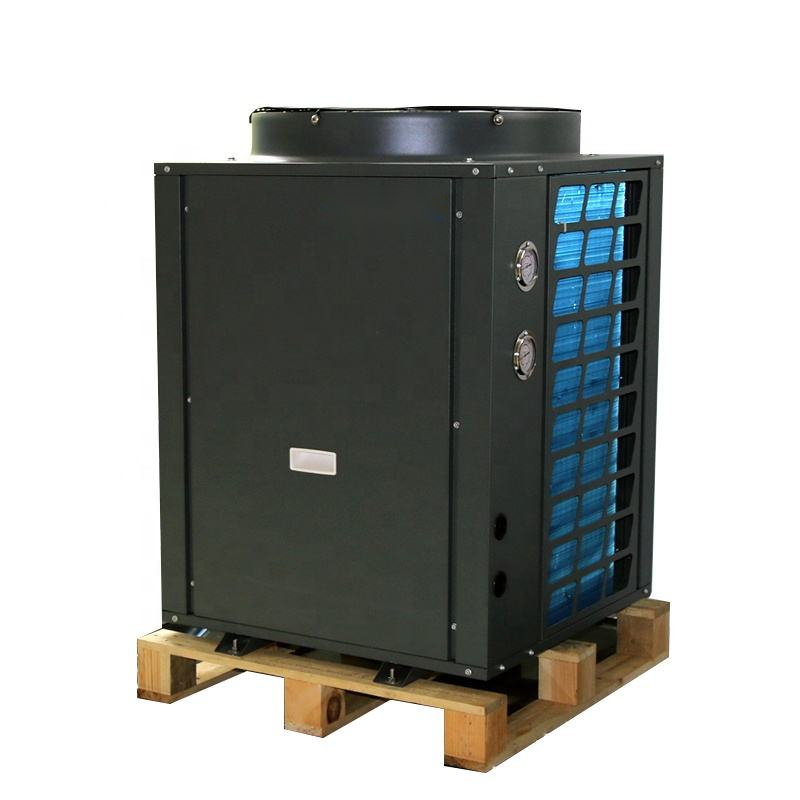
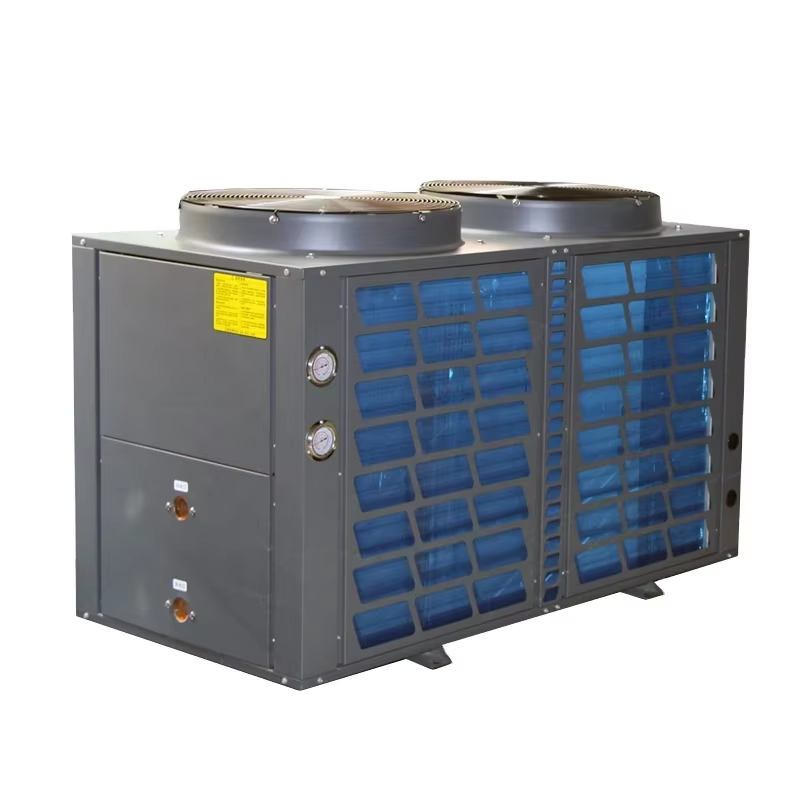
Commercial Medium-temperature Heat Pump Water Heater
Power consumption is only used to "move heat," not generate it, saving 70%-80% more energy than electric heating and being more environmentally friendly than gas heating (no exhaust emissions).
- Introduction
- Main features
- Specifications
- Recommended
Product Introduction
Working principle:
1.Heat Absorption Stage (Capturing Heat Energy from Air): The evaporator (outdoor unit) of the heat pump absorbs low-temperature heat energy from the surrounding air. Meanwhile, the refrigerant (a special medium with an extremely low boiling point) inside the evaporator absorbs this heat energy and vaporizes, turning into low-temperature, low-pressure gaseous refrigerant.
2.Compression and Temperature Rise Stage (Amplifying Heat Energy): The low-temperature, low-pressure gaseous refrigerant is drawn into the compressor. The compressor rapidly compresses the refrigerant, converting it into high-temperature, high-pressure gaseous refrigerant.
3.Heat Release and Water Heating Stage (Heating Pool Water): The high-temperature, high-pressure gaseous refrigerant enters the condenser. The condenser transfers the high-temperature heat energy of the refrigerant to the pool water flowing through it, raising the temperature of the pool water. As the refrigerant releases heat energy, it condenses into high-pressure liquid refrigerant.
4.Throttling and Pressure Reduction Stage (Cycle Reuse): The high-pressure liquid refrigerant passes through the throttling device, where its pressure drops sharply and its temperature decreases. It then turns back into low-temperature, low-pressure liquid refrigerant, flows into the evaporator again, and repeats the above four steps to form a continuous heating cycle, maintaining a constant temperature of the pool water.
1.Heat Absorption Stage (Capturing Heat Energy from Air): The evaporator (outdoor unit) of the heat pump absorbs low-temperature heat energy from the surrounding air. Meanwhile, the refrigerant (a special medium with an extremely low boiling point) inside the evaporator absorbs this heat energy and vaporizes, turning into low-temperature, low-pressure gaseous refrigerant.
2.Compression and Temperature Rise Stage (Amplifying Heat Energy): The low-temperature, low-pressure gaseous refrigerant is drawn into the compressor. The compressor rapidly compresses the refrigerant, converting it into high-temperature, high-pressure gaseous refrigerant.
3.Heat Release and Water Heating Stage (Heating Pool Water): The high-temperature, high-pressure gaseous refrigerant enters the condenser. The condenser transfers the high-temperature heat energy of the refrigerant to the pool water flowing through it, raising the temperature of the pool water. As the refrigerant releases heat energy, it condenses into high-pressure liquid refrigerant.
4.Throttling and Pressure Reduction Stage (Cycle Reuse): The high-pressure liquid refrigerant passes through the throttling device, where its pressure drops sharply and its temperature decreases. It then turns back into low-temperature, low-pressure liquid refrigerant, flows into the evaporator again, and repeats the above four steps to form a continuous heating cycle, maintaining a constant temperature of the pool water.
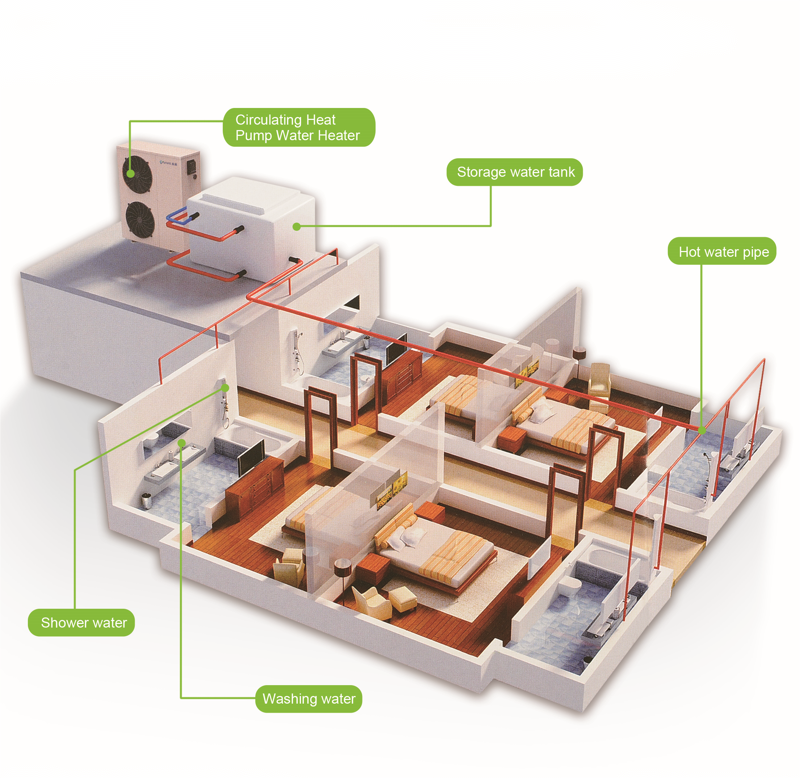
Main features
Features:
Power consumption is only used to "move heat," not generate it, saving 70%-80% more energy than electric heating and being more environmentally friendly than gas heating (no exhaust emissions).
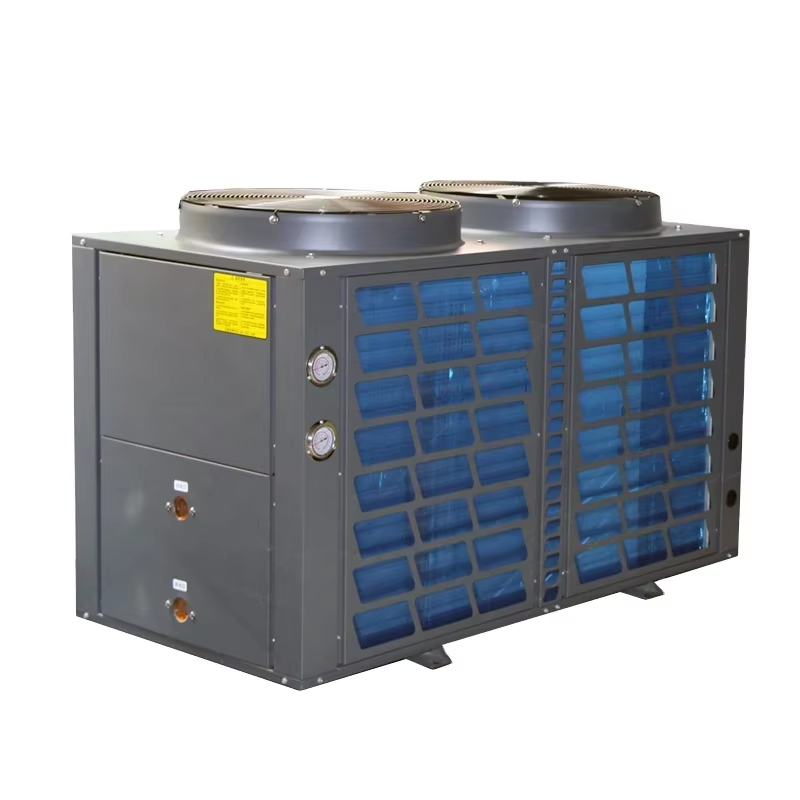
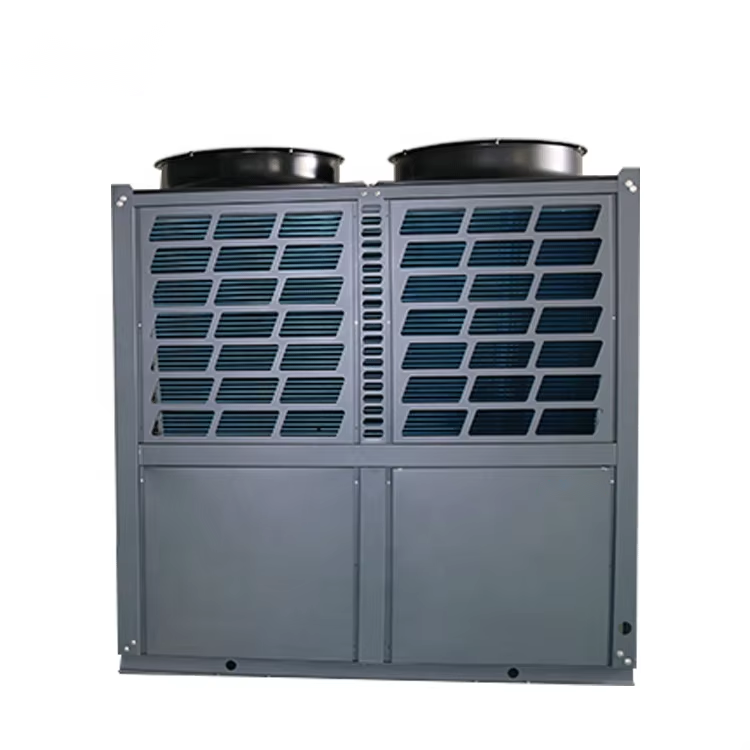
Specifications
| Commercial Medium-temperature Heat Pump Water Heater | ||||||||||
| JDLKFXRS-10 I/S2H | JDLKFXRS-10 II/S2H | JDLKFXRS-18 II/S2 | JDLKFXRS-18 II | JDLKFXRS-22 II/S2 | JDLKFXRS-36 II/S2 | JDLKFXRS-38 II | JDLKFXRS-45 II/S2 | JDLKFXRS-72 II/S2 | ||
| Power Supply | - | 220V~50Hz | 380V 3N~50Hz | 380V 3N~50Hz | 380V 3N~50Hz | 380V 3N~50Hz | 380V 3N~50Hz | 380V 3N~50Hz | 380V 3N~50Hz | 380V 3N~50Hz |
| Electric Shock Proof Grade | - | CLASS I | CLASS I | CLASS I | CLASS I | CLASS I | CLASS I | CLASS I | CLASS I | CLASS I |
| Protection Grade | - | IPX4 | IPX4 | IPX4 | IPX4 | IPX4 | IPX4 | IPX4 | IPX4 | IPX4 |
| Nominal Heating Capacity | kW | 9 | 9 | 16.5 | 19 | 21 | 33 | 38 | 42 | 72 |
| Rated Input Power | kW | 2.12 | 2.12 | 4.13 | 4.35 | 5.18 | 8.25 | 8.7 | 10.2 | 17.5 |
| COP | W/W | 4.2 | 4.2 | 4 | 4.4 | 4.1 | 4 | 4.4 | 4.1 | 4.1 |
| Max. Input Power | kW | 3.78 | 3.78 | 6.5 | 6.5 | 6.9 | 13 | 13 | 14.5 | 26 |
| Max. Working Current | A | 19.1 | 7.5 | 12.5 | 12.5 | 13.5 | 25 | 25 | 27 | 48 |
| Max. Water Temperature | ℃ | 60 | 60 | 60 | 60 | 60 | 60 | 60 | 60 | 60 |
| Water Yield | L/h | 215 | 215 | 355 | 400 | 473 | 710 | 800 | 920 | 1600 |
| Rated Circulating Water | m³/h | 1.8 | 1.8 | 3.5 | 3.5 | 4 | 7 | 7 | 8 | 13 |
| Water Pressure Loss | kPa | 70 | 70 | 70 | 70 | 75 | 80 | 80 | 80 | 90 |
| Noise | dB(A) | ≤58 | ≤58 | ≤62 | ≤62 | ≤63 | ≤64 | ≤64 | ≤66 | ≤69 |
| Refrigerant | - | R410A | R410A | R410A | R410A | R410A | R410A | R410A | R410A | R410A |
| Net Dimensional (WHD) | mm | 700×700×900 | 700×700×900 | 750×750×1050 | 750×750×1100 | 750×750×1050 | 1560×850×1210 | 1560×850×1140 | 1560×850×1050 | 2000×970×1680 |
| Machine Weight | kg | 90 | 90 | 105 | 120 | 125 | 210 | 240 | 250 | 650 |
| Circulating Pipe Diameter | DN | 25 | 25 | 25 | 25 | 25 | 40 | 40 | 40 | 50 |
| Evaporator Qty | Pcs | 1 | 1 | 1 | 1 | 1 | 2 | 2 | 2 | 2 |
| Motor Type/Qty | Pcs | AC motor/1 | AC motor/1 | AC motor/1 | AC motor/1 | AC motor/1 | AC motor/2 | AC motor/2 | AC motor/2 | AC motor/2 |
| Air Discharge Way | Type | Top Discharge | Top Discharge | Top Discharge | Top Discharge | Top Discharge | Top Discharge | Top Discharge | Top Discharge | Top Discharge |
| Throttle mode | Type | EEV/Thermal | EEV/Thermal | EEV/Thermal | EEV/Thermal | EEV/Thermal | EEV/Thermal | EEV/Thermal | EEV/Thermal | EEV/Thermal |
| Air side heat exchanger | Type | Fin-coil | Fin-coil | Fin-coil | Fin-coil | Fin-coil | Fin-coil | Fin-coil | Fin-coil | Fin-coil |
| Water side heat exchanger | Type | Tube-in-Tube | Tube-in-Tube | Tube-in-Tube | Tube-in-Tube | Tube-in-Tube | Tube-in-Tube | Tube-in-Tube | Tube-in-Tube | Tube-in-Tube |
| Testing condition 1.Heating:Ambient temp.(DB/WB):20℃/15℃, water temp.(inputoutput):15℃/55℃.2.Due to product improvement,the parameters in the table are subject to be changed without prior notice |
||||||||||